
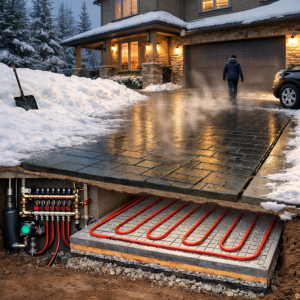
Snow can look beautiful, but clearing it is hard work. Early mornings with shovels, slippery walkways, and icy driveways are common winter problems. Many property owners now look for safer, easier ways to handle snow. One option gaining attention is a hydronic snow melt system. Before deciding, it helps to understand how it works, where it fits best, and how hydronic snow melt system cost plays a role in planning.
This guide breaks everything down in a clear, simple way so you can decide if this system matches your property and daily needs.
A hydronic snow melt system uses warm water flowing through pipes placed under outdoor surfaces. These pipes sit beneath driveways, sidewalks, steps, or ramps. When snow starts falling, gentle heat rises from below and melts it before ice can form.
The system works quietly and automatically. There is no need for salt, shoveling, or loud machines. Once installed, it runs in the background and keeps surfaces clear.
Snow removal takes time and effort. Miss one storm, and ice builds up fast. A snow melt system removes this stress by keeping surfaces clear all winter.
Daily benefits include:
These benefits matter for both homes and commercial spaces.
Not every property needs the same solution. Some locations gain more value from snow melt systems.
Good fits include:
Flat, small areas may not need this level of support, but busy or risky zones often do.
Ice is one of the biggest winter hazards. Slips can lead to injuries and damage claims. Snow melt systems help lower these risks by keeping surfaces dry.
Safety improvements include:
This is especially important for businesses and shared spaces.
Installing a snow melt system works best during new construction or surface replacement. Pipes are placed before concrete or pavers are finished.
Planning early allows:
Retrofits are possible but often cost more due to surface removal.
These systems do not run all the time. Sensors detect moisture and temperature, turning the system on only when needed. This helps control energy use.
Smart controls allow:
This balance helps manage running costs.
Many property owners ask about price early in the process. Snow melt system cost Ontario depends on several factors, not just size.
Key cost factors include:
Larger spaces require more tubing and energy, which affects overall cost.
Traditional snow removal includes shoveling, plowing, and salt use. These methods work, but they come with ongoing effort and risk.
Here is a simple comparison:
| Feature | Snow Melt System | Manual Removal |
| Labor | Very low | High |
| Safety | High | Varies |
| Surface damage | Low | Possible |
| Ongoing effort | Minimal | Ongoing |
Over time, the system can reduce repeated winter work.
Looking only at upfront cost does not show the full picture. Snow melt systems add long-term value by reducing winter upkeep.
Value benefits include:
For many owners, this steady value matters more than short-term savings.
Hydronic systems are built to last and need limited care. Most maintenance involves routine system checks.
Basic upkeep includes:
With proper care, systems run smoothly for many years.
Salt and chemical deicers harm plants, concrete, and nearby water sources. Snow melt systems reduce the need for these materials.
Environmental benefits include:
This supports safer and more responsible winter care.
While helpful, these systems are not for every situation.
They may not be ideal if:
In these cases, simpler snow removal methods may be enough.
The right choice depends on how your property is used. Think about safety, time spent on snow removal, and long-term comfort.
Ask yourself:
Clear answers help guide the decision.
When reviewing snow melt system cost, Ontario, consider both installation and long-term benefits. Fewer winter injuries, less labor, and cleaner surfaces all add value.
This system is not just about melting snow. It supports safer, easier winters year after year.
Choosing the right snow solution depends on safety needs, property use, and long-term goals. hydronic snow melt system cost ontario is an important part of planning, but comfort, safety, and ease often matter just as much. For property owners looking for reliable winter protection, a snow melt system can be a smart investment.
If you want expert guidance tailored to your property, Canadian In-Floor Radiant Solutions can help you explore options and plan a system that fits your needs. Reach out today to learn how a hydronic snow melt system can simplify winter and keep your outdoor spaces safe and clear.
FAQs
A hydronic snow melt system sends warm water through pipes placed under driveways, sidewalks, or steps. The heat rises from below and melts snow before ice can form, keeping surfaces clear and safe.
Running costs depend on system size, weather conditions, and how often it is used. Smart controls help reduce energy use by turning the system on only when snow or ice is present.
Yes, it can be added to existing surfaces, but installation works best during new construction or driveway replacement. Adding it later may cost more because the surface needs to be removed and replaced.
These systems need very little maintenance. Annual checks help confirm that the pipes, sensors, and controls are working properly and ready for winter use.
For homes with heavy snow, steep driveways, or frequent foot traffic, a snow melt system can save time, reduce slip risks, and remove the need for shoveling or salt use.
Expert heating solutions for your home and business — from radiant floors to snow melting and pool heating systems.
Unit #2, 633 Enfield Rd, Burlington, Ontario L7T 2X9, Canada.