
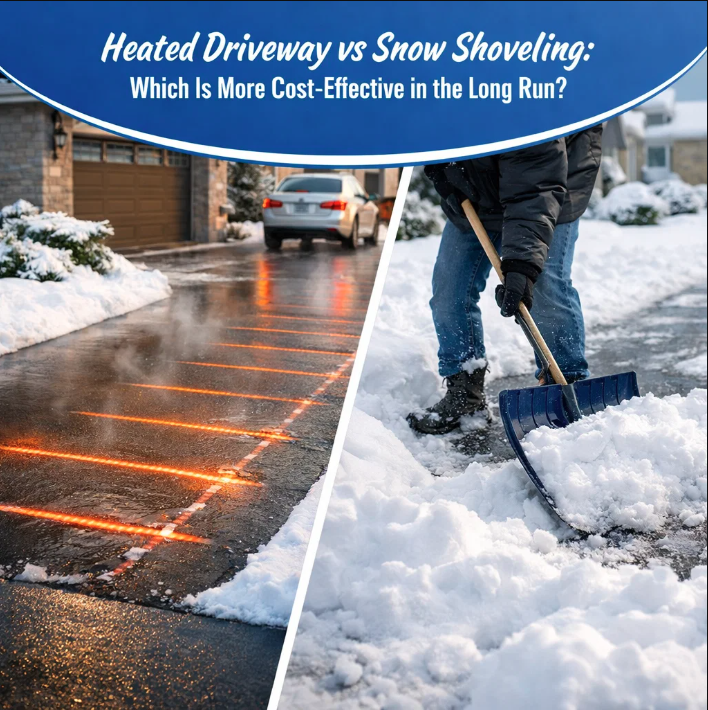
Winter mornings can quickly turn stressful when your driveway is covered in thick snow. Many homeowners spend time and energy clearing ice and snow just to leave their homes safely. This is why more people now compare traditional snow shoveling with modern heated driveway systems. If you are planning long term comfort and safety, it helps to get a free heated driveway estimate and see how the numbers look for your property.
A heated driveway system melts snow automatically using radiant heat installed under the driveway surface. Snow shoveling, on the other hand, depends on manual labor or hiring seasonal help. Both options have costs, but their long term value can look very different.
At first, shoveling snow seems like the cheaper option. A shovel is inexpensive, and many homeowners already have one in their garage. But over time, the hidden costs start adding up.
Frequent snowstorms mean repeated effort throughout the season. Clearing a large driveway can take 30 minutes to over an hour every time it snows. For busy families, that time quickly becomes a burden.
Some homeowners hire snow removal services. These services charge per visit or offer seasonal contracts. Over several winters, the total expense can become significant. On top of that, ice buildup can cause slips, falls, and potential injuries, which may lead to medical costs.
A heated driveway uses electric heating cables or hydronic tubing installed under concrete, asphalt, or pavers. When snow begins to fall, the system warms the driveway surface and melts the snow before it builds up.
The result is a clear driveway without manual effort. No shoveling, no salt spreading, and far less ice accumulation.
Homeowners who want to understand installation costs can easily get a free heated driveway estimate to compare their long term savings with regular snow removal expenses.
Snow shoveling may seem affordable at first glance, but the costs continue every winter. Snow removal tools, deicing salt, equipment maintenance, and paid services all contribute to ongoing expenses.
A heated driveway requires an upfront investment during installation. After installation, operating costs are usually limited to electricity or hydronic heating energy during winter storms.
Over many years, the difference becomes clear. A heated driveway system can reduce or remove the need for snow removal services, ice melting products, and physical labor. Many homeowners see strong value in the comfort and convenience it provides.
Snow and ice can damage driveways and walkways. Freeze and thaw cycles often lead to cracks in concrete or asphalt surfaces. Salt and chemicals used for melting ice can also harm landscaping and nearby surfaces.
A heated driveway helps prevent heavy snow buildup and reduces ice formation. This helps protect your driveway structure and lowers repair costs over time.
Safety is another major benefit. A clear driveway reduces the risk of slips and falls for family members, guests, and delivery drivers.
Imagine waking up during a snowstorm and seeing a clean driveway without lifting a shovel. That level of comfort is one of the biggest advantages of radiant snow melting systems.
Homeowners save time, avoid physical strain, and remove the stress of rushing outside in freezing temperatures. For people with busy schedules, older homeowners, or those with large driveways, this convenience can make a huge difference.
Canadian In-Floor Radiant Solutions specializes in designing customized radiant heating systems that match the size and layout of your driveway.
Snow shoveling works for many homeowners, but the effort, time, and ongoing expenses can grow year after year. Heated driveway systems offer a smart long term solution that improves safety, comfort, and property value.
If you want to explore the real cost for your home, the best step is to get a free heated driveway estimate from experts who understand radiant heating technology. For reliable service and expert guidance, rely on Canadian In-Floor Radiant Solutions to design a system that fits your home perfectly. Take the first step today and enjoy winters without the stress of snow removal.
FAQs
1. How does a heated driveway system melt snow?
A heated driveway uses electric heating cables or hydronic tubing placed under the driveway surface. When activated, the system produces radiant heat that warms the ground and melts falling snow before it builds up.
2. Is installing a heated driveway expensive?
Installation costs depend on driveway size, materials, and the type of heating system used. While the initial investment is higher than buying a shovel, many homeowners save money over time by reducing snow removal services and repairs.
3. Does a heated driveway increase property value?
Yes, many buyers see heated driveways as a luxury feature that improves safety and convenience. Homes with snow melting systems often attract buyers who want comfort during harsh winter seasons.
4. How much maintenance does a heated driveway require?
Heated driveway systems usually require very little maintenance once installed. Periodic inspections and proper system checks help ensure the heating components work efficiently during the winter season.
5. How can I know the cost for installing a heated driveway at my home?
The best way to understand the cost is to speak with a professional radiant heating provider. Experts can assess your driveway size, layout, and heating needs and provide a detailed estimate for installation.
Expert heating solutions for your home and business — from radiant floors to snow melting and pool heating systems.
Unit #2, 633 Enfield Rd, Burlington, Ontario L7T 2X9, Canada.