
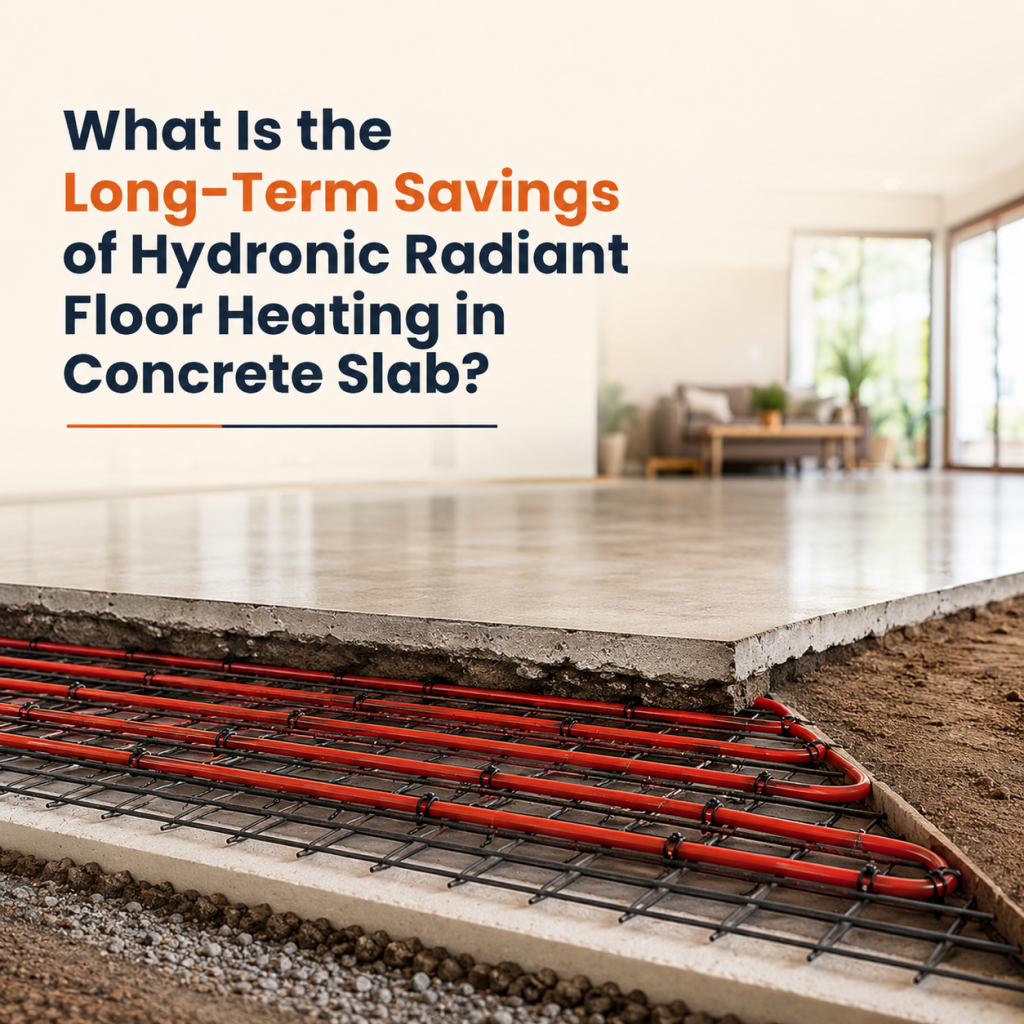
Summary: Hydronic radiant floor heating in concrete slab reduces long-term heating costs through steady heat release, low maintenance needs, and energy-efficient operation. The system uses warm water pipes inside slabs to create even floor heat, improving comfort in homes and large spaces. It supports different flooring types and delivers silent, stable indoor heating with consistent savings over time.
Hydronic radiant floor heating in a concrete slab is becoming a preferred choice for property owners who want steady indoor warmth with controlled running costs. In hydronic radiant floor heating in a concrete slab, warm water flows through pipes placed inside or below the concrete surface, allowing heat to spread evenly across the floor. This method supports energy control, reduces waste heat, and creates a stable indoor environment over long periods of use.
One of the strongest benefits of this system is how heat spreads through the entire floor instead of moving through air gaps. The concrete slab stores heat and releases it slowly, which means the system does not need to turn on and off frequently. This reduces power usage and lowers strain on heating equipment.
Since heat rises from the floor level, rooms feel warmer even at lower thermostat settings. This simple shift in temperature control plays a major role in reducing monthly heating expenses over time.
Unlike forced air systems that depend on fans, filters, and duct cleaning, this setup has fewer moving parts. Once installed, the system is sealed inside the slab, which reduces wear and tear.
Homeowners often see fewer service calls and less repair work compared to traditional heating methods. This adds to long-term financial savings since maintenance costs remain low across many years of use.
Modern homes often mix flooring materials for design and comfort. This system works well with multiple surface types without losing performance.
For example, radiant floor heating under hardwood allows wood surfaces to stay warm without damage, while radiant floor heating and wood floors maintain comfort without uneven heating patterns. The system adapts to different materials while keeping heat distribution balanced across rooms.
Concrete slabs are commonly used in basements, garages, and open floor layouts. These spaces usually take more energy to heat using traditional methods.
With hydronic systems, the slab itself becomes a heat storage unit. It slowly releases warmth, which helps maintain a consistent temperature even in larger areas. This reduces the need for constant heating cycles and improves overall efficiency.
Even though installation requires planning and setup work, the long-term savings come from reduced energy use. The system operates at lower water temperatures compared to electric heaters, which means less energy is required to maintain comfort levels.
Over time, this steady performance helps balance installation costs through reduced monthly bills and fewer repairs. Many property owners view it as a long-term heating investment rather than a short-term upgrade.
One overlooked advantage is silent operation. Since there are no blowers or vents pushing air, the system works without noise. This improves comfort in living spaces, bedrooms, and working areas.
Heat distribution remains even, so there are no cold corners or sudden hot air bursts. This steady comfort level reduces the need to constantly adjust settings, which also supports energy savings.
Modern hydronic systems can be paired with smart controls that allow room-by-room temperature adjustment. This helps avoid heating unused spaces, which leads to better energy use planning.
By controlling zones individually, homeowners can reduce unnecessary heating and focus energy only where it is needed. This supports long-term cost control and system efficiency.
Both residential and commercial spaces benefit from this system. Large floor areas in offices, retail spaces, and homes can maintain steady warmth without high energy spikes.
This reduces operational heating costs across seasons. Over time, the savings become more noticeable compared to traditional heating systems that depend heavily on forced air circulation.
Hydronic radiant floor heating in concrete slab delivers long-term savings through low energy use, reduced maintenance, and stable heat performance. Its ability to work quietly while maintaining comfort makes it suitable for modern buildings with long-term efficiency goals. For property owners looking to upgrade heating systems, professional support from experts like Canadian In-Floor Radiant Solutions Inc. ensures proper planning and installation quality. A well-designed setup using a concrete slab heating system can deliver consistent savings and reliable indoor comfort for many years.
For those planning a project or upgrade, now is the right time to request a radiant heating quote and explore system options designed for long-term value and efficiency.
1. How does hydronic radiant floor heating in a concrete slab work?
It circulates warm water through pipes inside concrete, allowing heat to rise evenly from the floor and maintain a steady indoor temperature without air blowing systems.
2. Does this system reduce energy costs?
Yes, it uses lower water temperatures and stores heat in the slab, which reduces energy use and lowers monthly heating expenses over long periods.
3. Can it be used with different flooring materials?
Yes, it works well with tile, wood, and mixed flooring types while maintaining even heat distribution across all surface materials.
4. Is maintenance required often?
No, the system has fewer moving parts and is sealed within the slab, which reduces repair needs and lowers maintenance costs over time.
5. Is it suitable for large spaces?
Yes, it performs well in large areas like basements, garages, and open layouts by storing and releasing heat evenly across the floor surface.
Expert heating solutions for your home and business — from radiant floors to snow melting and pool heating systems.
Unit #2, 633 Enfield Rd, Burlington, Ontario L7T 2X9, Canada.